

A difficult conversation does not always need hours. When both partners are willing and reasonably regulated, a structured 20-minute couples conflict reset can help you stop circling the issue and identify a useful next step.
This is not a timer for forcing resolution. It is a container. The time limit encourages focus, reduces repetition, and gives both people a clear beginning and ending.
Before you begin: check readiness
Ask two questions: “Are we both willing to talk?” and “Are we calm enough to listen?” If either answer is no, choose a specific return time. Do not use the reset during active intimidation, threats, coercion, or physical danger.
Minutes 0–2: set the purpose
Agree on one sentence that describes why you are talking. Keep it narrow and neutral.
- Helpful: “We need a plan for dividing weekend chores.”
- Too broad: “We need to fix our entire relationship.”
Then agree to avoid insults, interruptions, and unrelated historical examples for the next 20 minutes.
Minutes 2–6: Partner A explains
Partner A gets up to four minutes to describe:
- What happened
- What they felt
- What the situation meant to them
- What they need now
Use “I” language and specific examples. Partner B listens without preparing a rebuttal. They can take notes if that helps.
Minutes 6–8: Partner B reflects
Partner B summarizes: “What I hear is…” and asks, “Did I get the important part?” The goal is accurate understanding, not agreement.
Minutes 8–12: switch roles
Partner B now has up to four minutes to share the same four elements. Partner A listens.
Minutes 12–14: Partner A reflects
Partner A summarizes what they heard and checks for accuracy. If either partner corrects the summary, keep the correction brief and specific.
Minutes 14–17: find the shared concern
Ask, “What do we both want underneath this disagreement?” Possible answers include a fairer workload, more reliability, more rest, clearer expectations, or reassurance that the relationship matters.
A shared concern does not erase different perspectives. It gives you a place to cooperate.
Minutes 17–19: choose one next action
Make the action small enough to complete. Examples:
- Create a written task list tomorrow.
- Schedule a longer conversation for Saturday.
- Send a message if plans change by more than 30 minutes.
- Try one new division of responsibilities for a week.
Minute 19–20: close deliberately
Each person completes one sentence: “One thing I appreciate about how we handled this is…” If appreciation does not feel authentic, use: “One thing I understand more clearly now is…”
Bring structure into real-time conflict
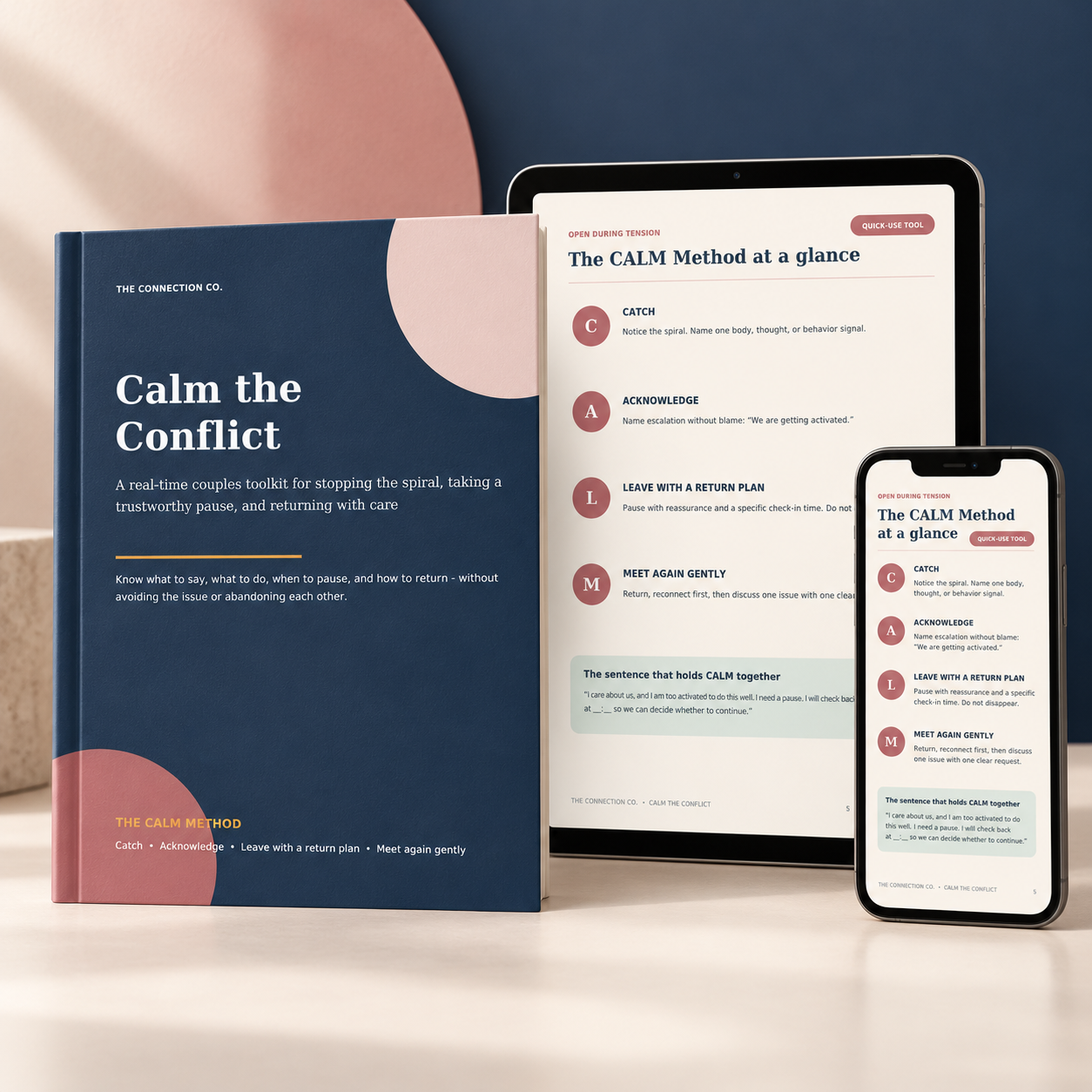
Calm the Conflict turns this kind of step-by-step support into an easy phone-friendly toolkit you can use when tension is already rising.
If 20 minutes is not enough
Stop when the timer ends and decide whether you need another scheduled conversation, outside information, or professional support. The reset succeeds when it creates clarity and reduces harm—not only when the issue is fully solved.
Common mistakes
- Using the timer as pressure: Neither person has to disclose more than feels safe.
- Debating the reflection: First show that you understand; problem-solving comes later.
- Choosing a vague next step: “Communicate better” is not measurable. Choose who will do what and when.
- Skipping the return: If you postpone, put the new time on the calendar.
Two practical tools for different moments
If you need help while conflict is happening, explore Calm the Conflict: A Real-Time Couples Toolkit. If you want to work on the deeper recurring pattern over time, explore Break the Loop: A 14-Day Couples Conflict Repair Reset. They can be used separately or together.
Frequently asked questions
Can we use the reset for serious issues?
It can organize an initial conversation, but complex financial, legal, parenting, health, or trust concerns may need more time and professional guidance.
What if one person talks longer?
Use a gentle timer and agree that both people deserve equal uninterrupted space. Schedule a follow-up if important details remain.
How often should couples use it?
Use it when a focused conflict needs structure. It should not replace everyday connection, affection, or longer conversations.

Leave a Reply